Swim lessons dramatically reduce a child's drowning risk, but no single measure is ever enough on its own. Water safety works in layers - and most of those layers live at home, not at the pool. Here's the checklist I walk through with families every spring.
Never rely on a single barrier
A four-sided, self-latching fence around a home pool is the most effective barrier there is. Pair it with door alarms on any door leading to the water and a rigid safety cover for the off-season. Each layer buys time; together they buy a lot of it.
Designate a Water Watcher
At every gathering, one adult should be the designated Water Watcher - phone away, eyes on the water - and hand off the role explicitly when they need a break. "I thought someone was watching" is the most dangerous sentence at a pool party.
Teach the rules, then rehearse them
Ask permission before entering the water. Walk, don't run, on the deck. No breath-holding contests. Kids remember rules they've practiced far better than rules they've only heard.
Keep reaching and throwing aids close
A reaching pole and a throwable ring near a home pool turn a scary moment into a manageable one. You never want to be swimming out to a struggling swimmer if you can reach or throw instead.
Keep lessons going year-round
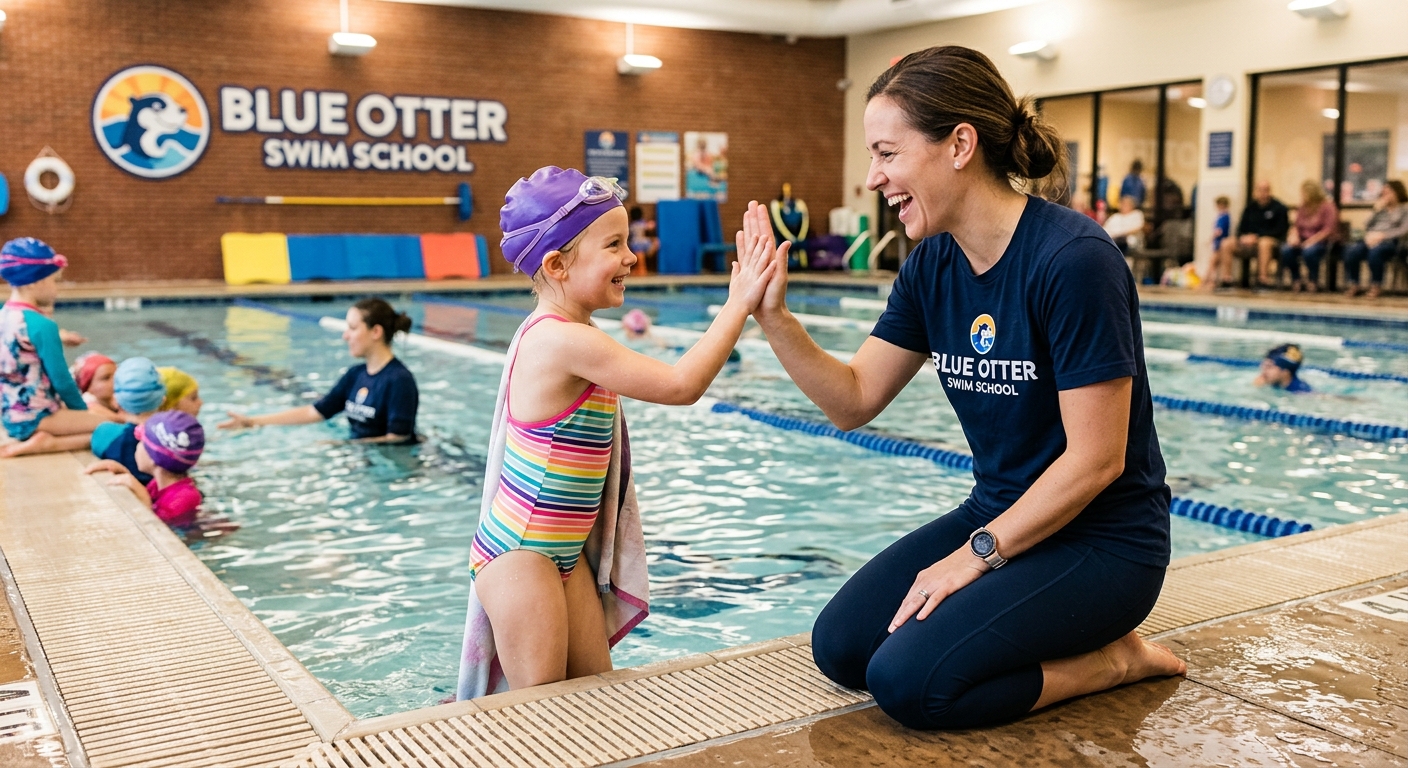
Skills fade over a long off-season. Because our pool is indoors and heated to 90°F, Blue Otter families keep progressing through the winter - so summer starts from strength, not from scratch.
Want a copy of our full home water-safety guide? Ask at the front desk or bring it up at your next lesson.
